
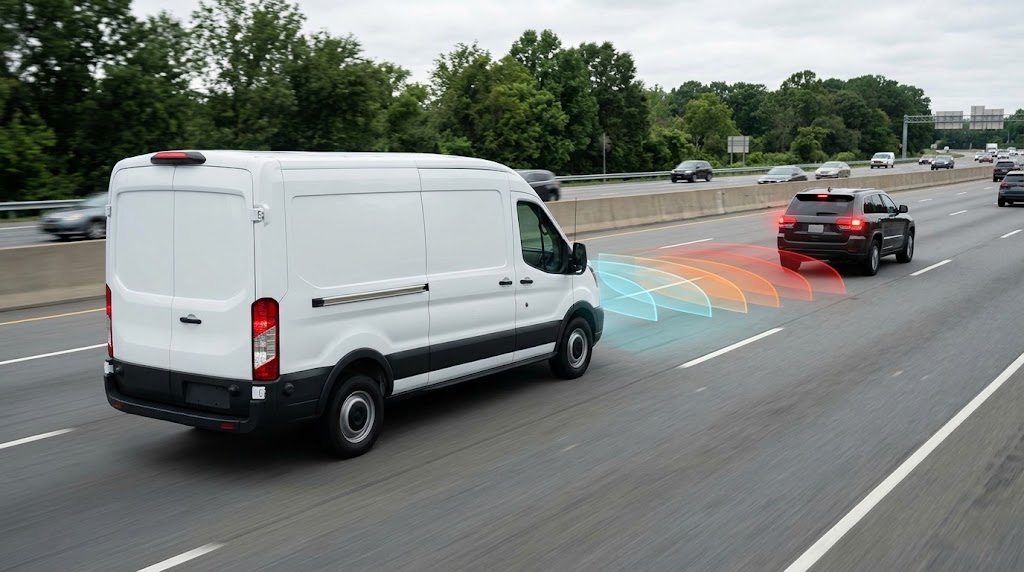
Learning how to prevent rear-end collisions is one of the most critical safety priorities for any commercial fleet. A single rear-end crash can instantly disrupt business operations, resulting in costly repair bills, lost productivity, rising insurance premiums, and serious legal liability. Establishing a proactive risk management plan protects both your drivers and your bottom line long before an incident occurs.
1. Establish Rigorous Driver Vetting and Record Checks
Table of Contents
According to the National Highway Traffic Safety Administration, rear-end collisions are among the most common road accidents.
Preventing crashes begins long before an employee turns the ignition. Thorough vetting ensures only responsible, licensed individuals represent your company behind the wheel.
- Regular Motor Vehicle Record (MVR) Audits and prevent rear-end collisions: Do not rely solely on pre-employment screening. Regularly reviewing Motor Vehicle Records (MVRs) ensures only qualified drivers represent your company and allows management to spot speeding violations or license suspensions early.
- Documented Company Driving Policies: Establish clear vehicle operating guidelines. Define strict disciplinary measures for aggressive driving, tailgating, and violations of company safety rules.
2. Defensive Driving Habits to Prevent Rear-End Collisions
Even seasoned commercial drivers can pick up careless habits. Combine vetting with routine driver education that stresses maintaining safe stopping distances, eliminating mobile phone distractions, and planning routes in advance to remove the pressure of rushed navigation.
- Maintain a Safe Following Cushion: Enforce the three-to-four-second following distance rule under clear conditions. When driving in heavy rain, fog, or winter road conditions, instruct operators to expand that buffer to six seconds or more.
- Eliminate In-Cab Distractions: Mobile phone use is a primary contributor to delayed braking. Implement a strict company-wide hands-free mandate prohibiting texting, messaging, or handheld navigation while the vehicle is in gear.
- Plan Travel Routes Early: Rushed drivers are far more prone to tailgating and abrupt braking. Route planning in advance removes scheduling pressure and prevents last-second exits or erratic lane changes.
3. Leverage Vehicle Safety and Braking Technology
Modern vehicle technology can also serve as an effective safety cushion. Equipping your commercial fleet with advanced driver-assistance systems gives operators valuable assistance during sudden traffic stops.
- Forward-Collision Warning (FCW): Scans the road ahead using radar and camera sensors, warning the operator with audible and visual alerts when closing speeds are unsafe.
- Automatic Emergency Braking (AEB): Works as a vital failsafe designed to prevent rear-end collisions by applying stopping power automatically if the operator fails to react in time.
While onboard electronics significantly mitigate crash frequency, they work best as an added layer of support alongside focused, defensive driving habits.
4. Conduct Routine Fleet Maintenance Audits
Braking distance is directly tied to mechanical performance. A driver can react instantly, but worn components will undermine any effort to avoid impact.
- Brake Inspections: Routinely check brake pads, rotors, and hydraulic lines on every fleet vehicle according to manufacturer schedules.
- Tire Tread and Pressure: Under-inflated tires or bald treads drastically increase stopping distances on wet roads. Inspect tire pressures weekly and replace tires well before tread depth reaches legal minimums.
5. Confirm Commercial Auto Policy Alignment
Risk management also means confirming your financial protection matches your day-to-day operations. When severe accidents occur, third-party liability claims can quickly surpass standard policy limits.
A frequent oversight for growing businesses is employee vehicle usage. MIIA Insurance helps businesses review their commercial auto coverage to address real-world vehicle use, including protection when employees drive personal cars for work purposes. Adding Hired and Non-Owned Auto (HNOA) coverage ensures your company remains protected even when staff members run work errands in personal cars.
Take proactive steps today to prevent rear-end collisions and safeguard your business. Contact our team at MIIA Insurance today to ensure your business auto policy is aligned with your fleet.